Wooden Balance Beam & Stepping Stones for Toddlers
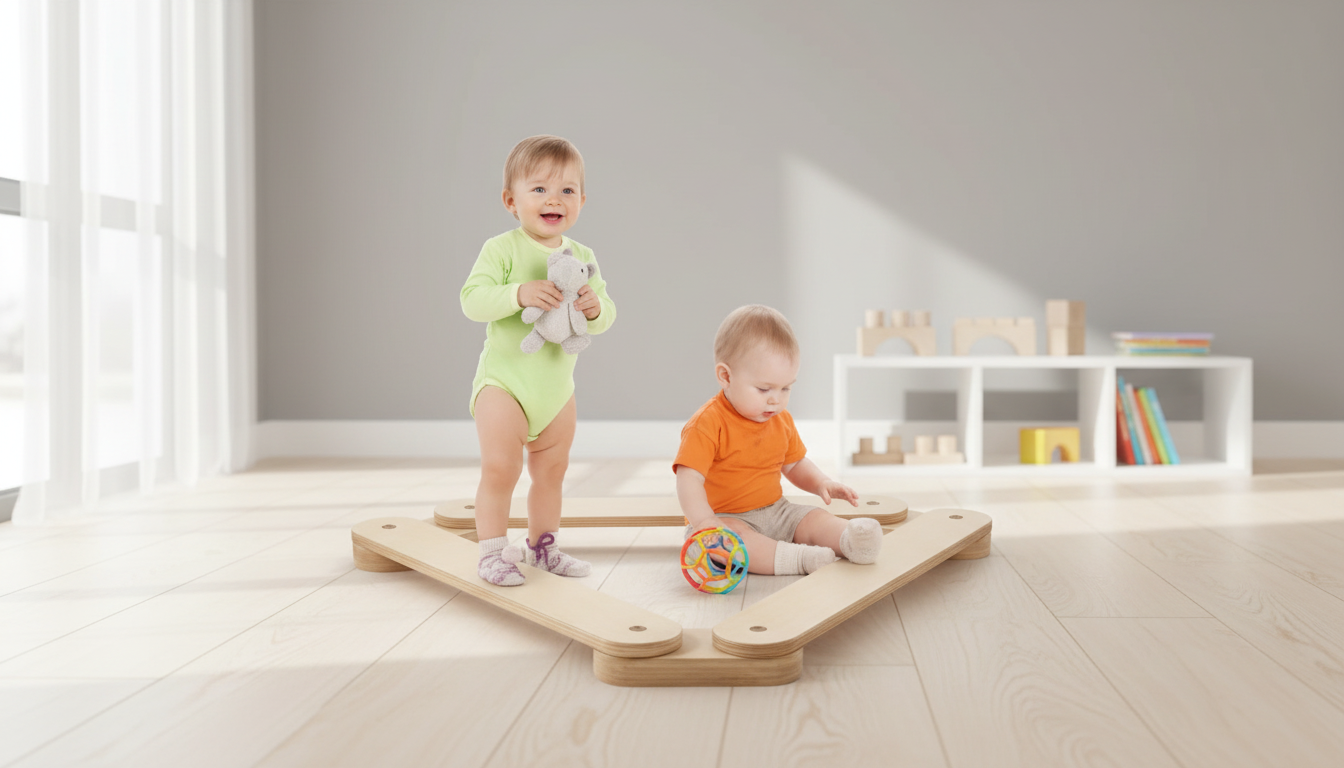
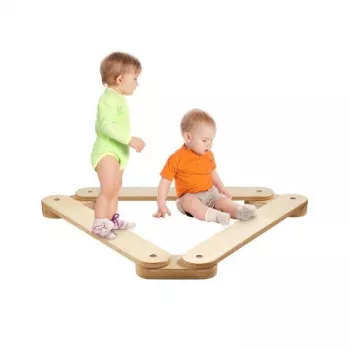
Wooden Balance Beam Stepping Stones for Kids – Montessori Toy for Toddlers
A wooden balance beam and stepping stone set turns everyday play into movement practice—helping toddlers and young kids build balance, coordination, and body awareness through simple, open-ended challenges indoors or outdoors. With a few modular pieces, children can create their own “paths” to cross, repeat favorite routes, and gradually take on new challenges as their confidence grows.
What this balance beam and stepping stone set is
A wooden balance beam and stepping stone set is a collection of modular pieces that children can arrange into beams, paths, or obstacle-course routes. Because it’s open-ended, it works for quick five-minute movement breaks, longer imaginative play sessions, and structured games with a parent or caregiver.
- Modular wooden pieces that can be arranged as beams, paths, or obstacle-course routes.
- Designed for active play that supports gross motor skills, balance, and coordination.
- Works well for independent play, parent-guided games, or small-group activities.
If you’re looking for a ready-to-play option, see Wooden Balance Beam Stepping Stones for Kids – Montessori Toy for Toddlers.
Why toddlers benefit from balancing play
Balancing play is more than “getting the wiggles out.” It strengthens the movement foundations that support everyday skills like climbing stairs, hopping, running, and navigating playground equipment. Developmental checklists such as the CDC’s child milestones highlight how movement skills build step-by-step over time, and purposeful balance activities fit naturally into that progression.
- Encourages core strength and postural control through steady stepping and turning.
- Builds coordination by pairing foot placement with visual tracking and planning.
- Supports confidence by offering “just-right” challenges that can be made easier or harder.
- Promotes focus and patience as children slow down to stay on the path.
Regular active play also aligns with broader guidance from the American Academy of Pediatrics, which encourages daily movement opportunities for kids.
Montessori-style ways to use it
Montessori-inspired play tends to be simple, intentional, and child-led. With a balance beam and stones, that can look like setting up a clear invitation (“Here’s a path from start to finish”) and letting the child repeat it until their body figures out the best strategy.
- Invite purposeful movement: a simple line to follow from “start” to “finish” without rushing.
- Create practical-life missions: carry a soft toy, beanbag, or small basket from one end to the other.
- Use minimal verbal correction; let the child notice wobbles and adjust posture naturally.
- Offer choice: let the child design the route, then try it together.
Skill-building games and what they practice
| Game idea | How to set it up | Skills supported |
|---|---|---|
| Straight path walk | Arrange pieces in a simple line with wide spacing | Balance, confidence, gait control |
| Slow steps challenge | Mark a start/finish; child takes “quiet feet” steps | Body awareness, self-regulation, focus |
| Obstacle “islands” | Place stones as islands with small gaps between | Jumping/stepping accuracy, planning |
| Side-step bridge | Make a short beam segment; side-step across | Hip stability, coordination, lateral movement |
| Carry & deliver | Carry a light object from point A to B | Coordination, attention, controlled movement |
Setting up a safe play space
A thoughtful setup makes balancing play feel secure and helps kids focus on the challenge instead of the environment. For general toy safety guidance, the U.S. Consumer Product Safety Commission (CPSC) is a helpful reference point.
- Place on a flat surface; for indoor play, a rug or foam mat can reduce slipping and soften falls.
- Start with low complexity: fewer pieces, shorter routes, and wider gaps between stones.
- Keep the area clear of furniture edges and hard objects around the course perimeter.
- Use active supervision for toddlers, especially when introducing stepping or jumping variations.
One practical tip: reposition pieces by lifting rather than dragging to help protect floors and keep the course stable. If your play area gets messy fast (crumbs, sand, craft bits), a quick cleanup tool like the 28Kpa Cordless Vacuum Cleaner, 3 Modes Handheld Stick Vacuum for Pet Hair, Carpet & Hard Floor can make it easier to keep the surface clear before setting up.
Right age range and how to scale the challenge
This kind of set can grow with your child because the same pieces can feel “easy” or “tricky” depending on spacing, turns, and the rules of the game. Scaling the challenge keeps frustration low and motivation high.
- For early walkers: focus on stepping from one stable point to the next with hand support nearby.
- For confident toddlers: add gentle turns, small “stop points,” or a slow-count rhythm (e.g., pause for 2 seconds on each stone).
- For preschoolers: introduce patterns (step–step–pause), backward walking on a short segment, or simple “don’t touch the floor” routes.
- Adjust difficulty by changing spacing, adding curves, or mixing beams with stones.
What to look for in wooden balance sets
Care, storage, and playroom longevity
A practical gift for active kids
For a gift that blends open-ended play with real movement practice, explore Wooden Balance Beam Stepping Stones for Kids – Montessori Toy for Toddlers.
FAQ
Is a wooden balance beam set safe for toddlers?
It can be safe with active supervision, especially when you start with simple layouts and wide spacing. Use a rug or foam mat for traction, keep the area clear, and match the course to your child’s current walking confidence.
How can the difficulty be adjusted as a child grows?
Increase challenge by widening gaps, adding turns, mixing beams and stones, and introducing “carry and deliver” tasks. Older kids also enjoy pauses, patterns, and short backward-walking segments on a low, stable section.
Can it be used indoors without damaging floors?
Yes—place the set on a rug or foam mat, keep the bottoms clean and dry, and lift pieces to reposition instead of dragging them. That combination helps reduce scuffs and keeps the course from shifting.






Leave a comment