CFM Vacuum Pump Guide: Pick the Right Flow for Dry Evac
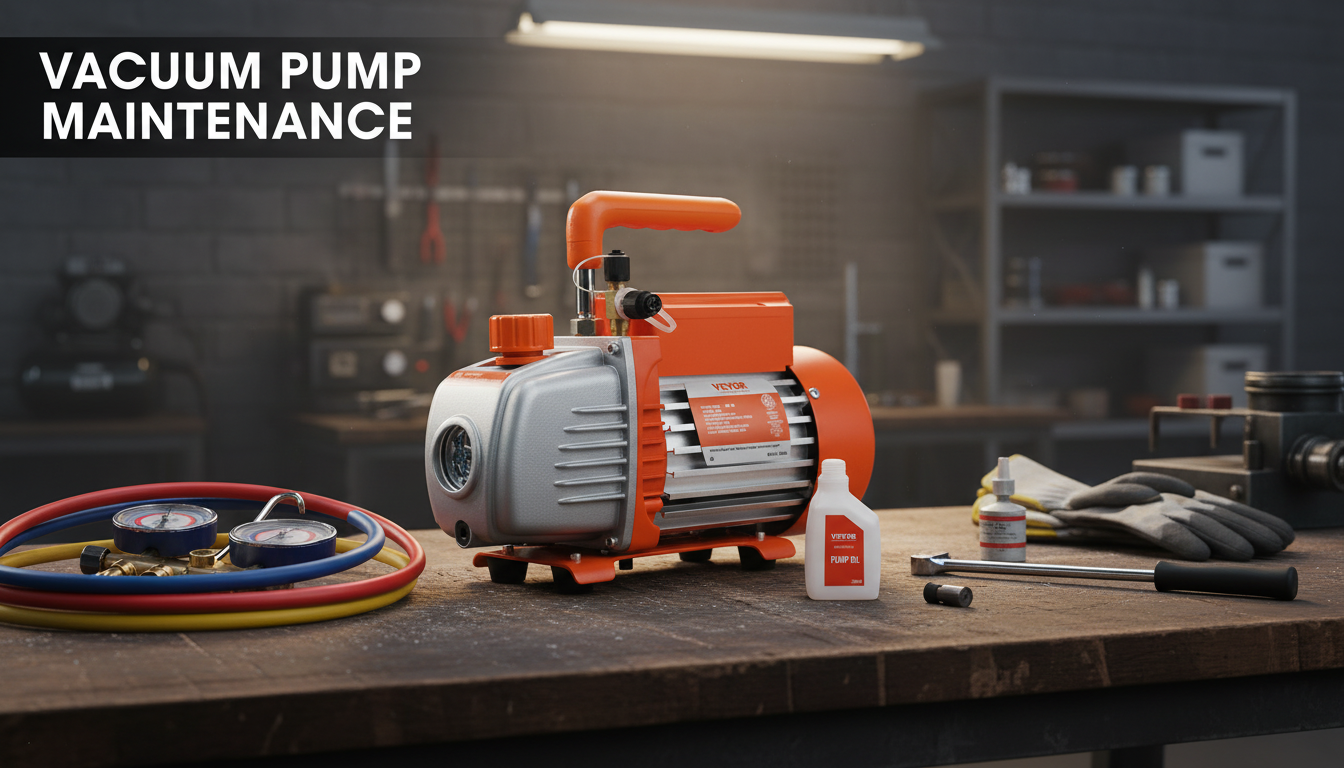
CFM Vacuum Pumps Explained: Choosing the Right Flow Rate for Clean, Dry Evacuation
A vacuum pump’s CFM rating affects how quickly it can remove air and moisture from a sealed system. The right match depends on system volume, hose setup, and how dry the system needs to be—not just raw speed. This guide breaks down what CFM means in real use, when a 3.5 CFM pump is a practical fit, and which features and habits help reach a stable, low-micron vacuum.
What the CFM rating actually tells you
CFM (cubic feet per minute) is a flow-rate measure—how much air a vacuum pump can move under certain conditions. It’s useful for comparing pumps, but it’s not a promise that any specific system will evacuate in a certain number of minutes.
Real pull-down time depends on more than CFM. System volume matters, but restrictions often matter more: narrow hoses, manifold paths, small fittings, and installed valve cores can choke flow. Contamination also dominates performance; moisture, oil residue, and debris can slow evacuation dramatically because the last stage of evacuation is often about drying and stabilizing, not just removing “air.”
As vacuum deepens, effective flow drops. The pump can move a lot of vapor early on, but the final stretch—driving moisture out and holding a low micron level—tends to be the slowest part. A higher-CFM pump may shorten the initial evacuation, but if hoses are restrictive or there’s a small leak, the advantage can disappear.
Typical CFM ranges and where they tend to fit
| Pump flow rate (CFM) | Common use cases | What to watch for |
|---|---|---|
| 1.5–2.5 | Small sealed systems, light service work, compact setups | Longer pull-down time; hose restrictions become more noticeable |
| 3.0–4.0 | Many residential HVAC/R service tasks and general-purpose evacuation | Good balance; focus on hoses, core removal, and leak-tight connections |
| 5.0+ | Larger systems or frequent high-volume work where time savings matter | Higher cost/size; still needs low-restriction setup to realize benefits |
When a 3.5 CFM vacuum pump makes sense
A 3.5 CFM class pump is a common “middle ground” choice for routine evacuation work: enough flow to feel efficient without the cost and bulk of higher-output pumps. For many residential and light commercial service scenarios, it can deliver strong real-world results when the rest of the setup supports it.
It’s also a practical fit for occasional users who want a noticeable speed-up versus smaller pumps while keeping storage footprint and budget under control. The key is removing bottlenecks—especially at the service ports—so the pump can actually move vapor instead of fighting restrictions.
If daily work involves large line sets, long hose runs, multiple systems back-to-back, or repeated evacuations where every minute counts, moving up in CFM can reduce total job time. But the time savings only show up when hoses, fittings, and valve-core strategy allow high conductance.
On the other hand, if the main struggle is reaching (and holding) a deep, stable vacuum because of moisture, procedure often beats raw CFM. Leak checking, isolation testing, oil changes, and (when appropriate) breaking with dry nitrogen and re-evacuating can matter more than stepping up one pump size.
Features that matter beyond CFM
Two pumps with the same CFM can behave very differently in the field. These are the features that tend to affect whether you can reach low microns efficiently and repeatably:
- Vacuum depth and stability: The pump must be capable of a deep vacuum. Confirm results with a micron gauge placed at the system—not at the pump—so you’re measuring the system’s actual pressure.
- Oil management (for oil-sealed pumps): Clean oil is one of the biggest drivers of performance. Fresh oil can help a moderate-CFM pump reach lower microns faster than a higher-CFM pump running contaminated oil.
- Inlet and hose compatibility: Larger ports and the ability to run larger-diameter hoses reduce restriction, improving real evacuation speed more than many people expect.
- Thermal protection and duty cycle: Longer evacuations can heat the pump; protection features help prevent shutdowns and reduce oil breakdown.
- Sight glass and drain design: Easy oil checks and clean draining increase the odds oil gets changed on time.
- Noise, vibration, and portability: Important for frequent transport, indoor work, and overall usability.
Setup that helps you reach low microns faster
For compliance and best practices in refrigerant handling, refer to U.S. EPA Section 608 requirements and applicable guidance from ASHRAE standards and guidelines.
Maintenance habits that protect performance
Product options in stock
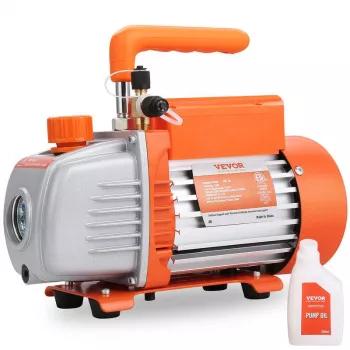
- 3.5 CFM Vacuum Pump — A balanced-flow option for routine evacuation work when paired with low-restriction hoses and a micron gauge.
- 150 lbs Stair Climbing Cart – Foldable Utility Hand Cart with 65L Rolling Crate — Helpful for moving a pump, recovery gear, and tool bags across job sites.
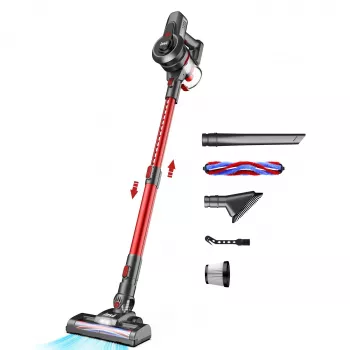
- 28Kpa Cordless Vacuum Cleaner, 3 Modes Handheld Stick Vacuum — A convenient way to keep work areas clean after installs or service calls.
Quick listing snapshot
| Item | Detail |
|---|---|
| Product | 3.5 CFM Vacuum Pump |
| Price | $67.01 USD |
| Availability | In stock |
FAQ
Is a higher CFM vacuum pump always better?
Not always. Higher CFM can reduce initial pull-down time, but hose diameter/length, valve cores, leak tightness, and moisture often determine whether you can reach and hold a deep vacuum.
How long should evacuation take with a 3.5 CFM pump?
It varies by system volume, restriction, and moisture level. Use a micron gauge and an isolation test to confirm a stable low-micron vacuum rather than relying on minutes elapsed.
Do you need a micron gauge if the pump has a CFM rating?
Yes. CFM describes flow capacity, not the vacuum level achieved at the system. A micron gauge placed at the system is the standard way to verify deep vacuum and distinguish leaks from moisture outgassing.










Leave a comment