Powerful Performance for Everyday Adventure
Step into your day with confidence with this rugged and stylish smartwatch built for both outdoor explorers and everyday achievers. Designed with a full-metal body, stainless steel back, and a crisp 1.43-inch AMOLED display, this watch delivers bold looks and reliable strength. It’s equipped with military-grade durability, advanced fitness tracking, and seamless Bluetooth calling, making it the perfect companion whether you’re working out, working hard, or exploring the world.
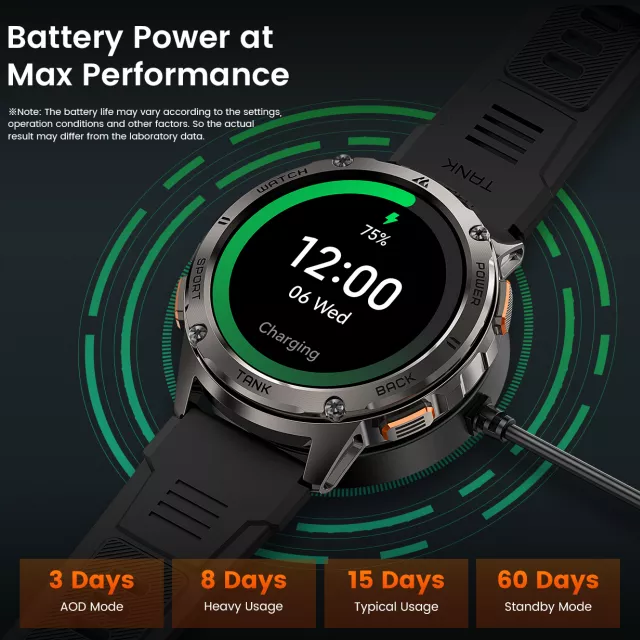
This smartwatch is best used during workouts, outdoor activities, daily routines, and even at night thanks to its smart sleep tracking. With professional waterproof protection up to 5ATM & IP69K, you can wear it confidently in heavy rain, during intense training sessions, or even while swimming. Its Always-On Display keeps your stats visible at all times, while the long-lasting battery offers up to 15 days of daily use.
Features That Elevate Your Lifestyle
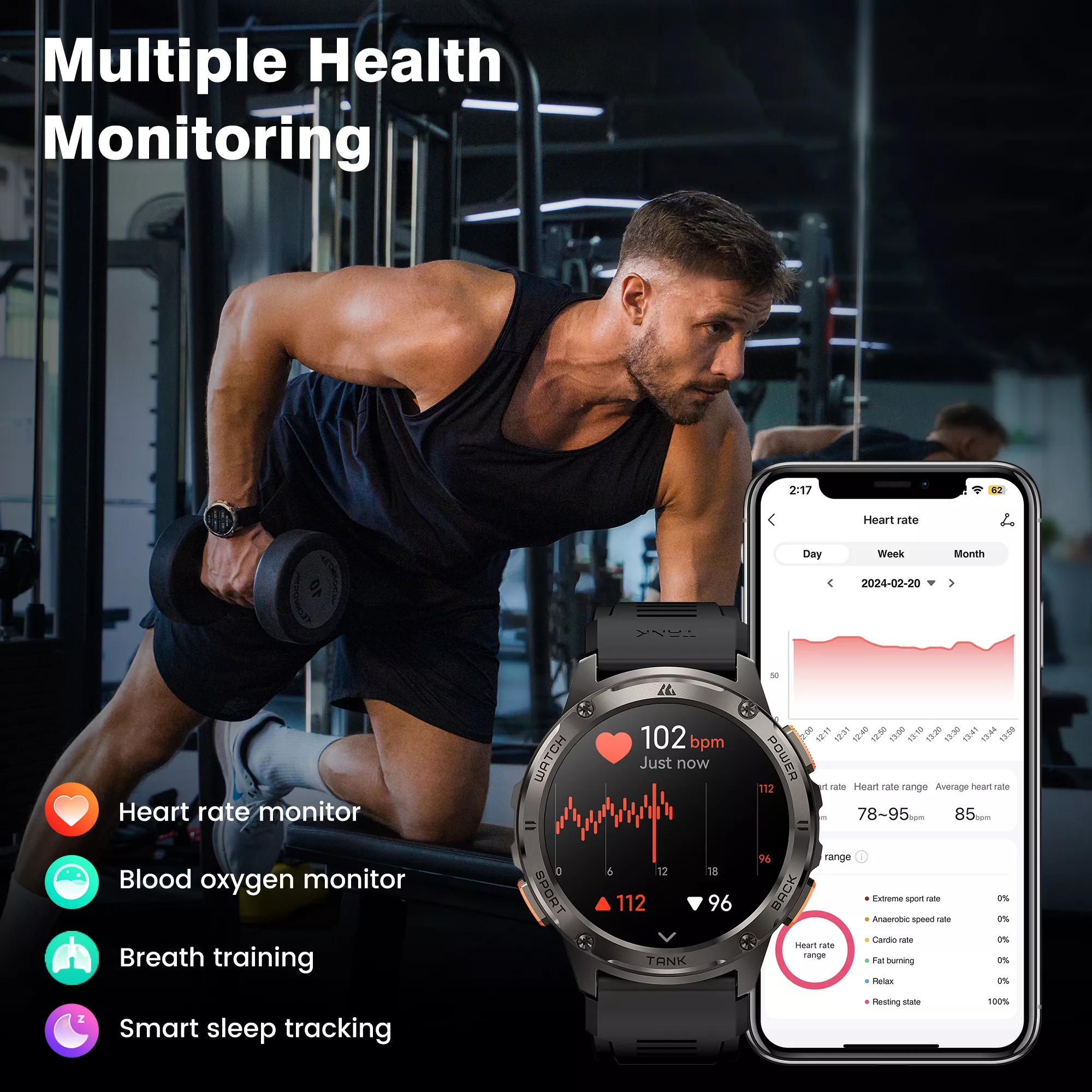
This smartwatch brings together all the essential features you need to stay connected and motivated. Enjoy Bluetooth calling with high-fidelity audio, AI voice assistance, weather updates, remote camera control, calculators, music control, and more. With over 100 sports modes and automatic activity recognition, it tracks your steps, calories, distance, heart rate, and blood oxygen levels, helping you monitor your health in real time. The watch also offers multilingual support, making it accessible for users around the world.
Benefits You’ll Love
- Stay connected anywhere with Bluetooth calling, message reminders, and voice command support.
- Train smarter using heart rate, sleep, blood oxygen, and activity monitoring.
- Built for durability with military-standard toughness and a full-metal construction.
- Vivid, ultra-bright display thanks to the 466×466 AMOLED screen with Always-On visibility.
- Ideal for any activity with 100+ sports modes and waterproof performance.
- Long battery life providing up to 50 days on standby and up to 15 days of daily use.
- Personalized style through 100+ downloadable watch faces and custom dial options.
Why This Smartwatch Stands Out
What makes this smartwatch truly special is its combination of strength, style, and intelligence. It’s built tough for outdoor conditions yet refined enough for daily wear. Its advanced health sensors help you understand your body better, while its smooth Bluetooth features keep you effortlessly connected. Whether you’re hitting the gym, heading to work, or conquering the outdoors, this smartwatch is ready to match your pace.
Take control of your fitness, your schedule, and your lifestyle — all from your wrist. Get yours today and experience technology designed to empower every moment.
We are proud to offer international shipping services that currently operate in over 200 countries and islands world wide. Nothing means more to us than bringing our customers great value and service. We will continue to grow to meet the needs of all our customers, delivering a service beyond all expectation anywhere in the world.
How do you ship packages?
Packages from our warehouse in China will be shipped by ePacket or EMS depending on the weight and size of the product. Packages shipped from our US warehouse are shipped through USPS.
Do you ship worldwide?
Yes. We provide shipping to over 200 countries around the world. However, there are some locations we are unable to ship to. If you happen to be located in one of those countries we will contact you.
What about customs?
We are not responsible for any custom fees once the items have shipped. By purchasing our products, you consent that one or more packages may be shipped to you and may get custom fees when they arrive to your country.
How long does shipping take?
Shipping time varies by location. These are our estimates:
| Location | *Estimated Shipping Time |
| United States | 10-30 Business days |
| Canada, Europe | 10-30 Business days |
| Australia, New Zealand | 10-30 Business days |
| Central & South America | 15-30 Business days |
| Asia | 10-20 Business days |
| Africa | 15-45 Business days |
Do you provide tracking information?
Yes, you will receive an email once your order ships that contains your tracking information. If you haven’t received tracking info within 5 days, please contact us.
My tracking says “no information available at the moment”.
For some shipping companies, it takes 2-5 business days for the tracking information to update on the system. If your order was placed more than 5 business days ago and there is still no information on your tracking number, please contact us.
Will my items be sent in one package?
For logistical reasons, items in the same purchase will sometimes be sent in separate packages, even if you've specified combined shipping.
If you have any other questions, please contact us and we will do our best to help you out.
Order cancellation
All orders can be cancelled until they are shipped. If your order has been paid and you need to make a change or cancel an order, you must contact us within 12 hours. Once the packaging and shipping process has started, it can no longer be cancelled.
Refunds
Your satisfaction is our #1 priority. Therefore, you can request a refund or reshipment for ordered products if:
- If you did not receive the product within the guaranteed time( 45 days not including 2-5 day processing) you can request a refund or a reshipment.
- If you received the wrong item you can request a refund or a reshipment.
- If you do not want the product you’ve received you may request a refund but you must return the item at your expense and the item must be unused.
We do not issue the refund if:
- Your order did not arrive due to factors within your control (i.e. providing the wrong shipping address)
- Your order did not arrive due to exceptional circumstances outside the control of lucy.sale (i.e. not cleared by customs, delayed by a natural disaster).
- Other exceptional circumstances outside the control of https://lucy.sale
*You can submit refund requests within 15 days after the guaranteed period for delivery (45 days) has expired. You can do it by sending a message on Contact Us page
If you are approved for a refund, then your refund will be processed, and a credit will automatically be applied to your credit card or original method of payment, within 14 days.
Exchanges
If for any reason you would like to exchange your product, perhaps for a different size in clothing. You must contact us first and we will guide you through the steps.
Please do not send your purchase back to us unless we authorise you to do so.
Customer Reviews
There are no reviews yet